E
Energy
Crude oil and natural gas connect with transportation, manufacturing, inventories and economic activity.
Explore energy, metals and agriculture through the fundamentals that shape supply, demand, prices and the wider economy.
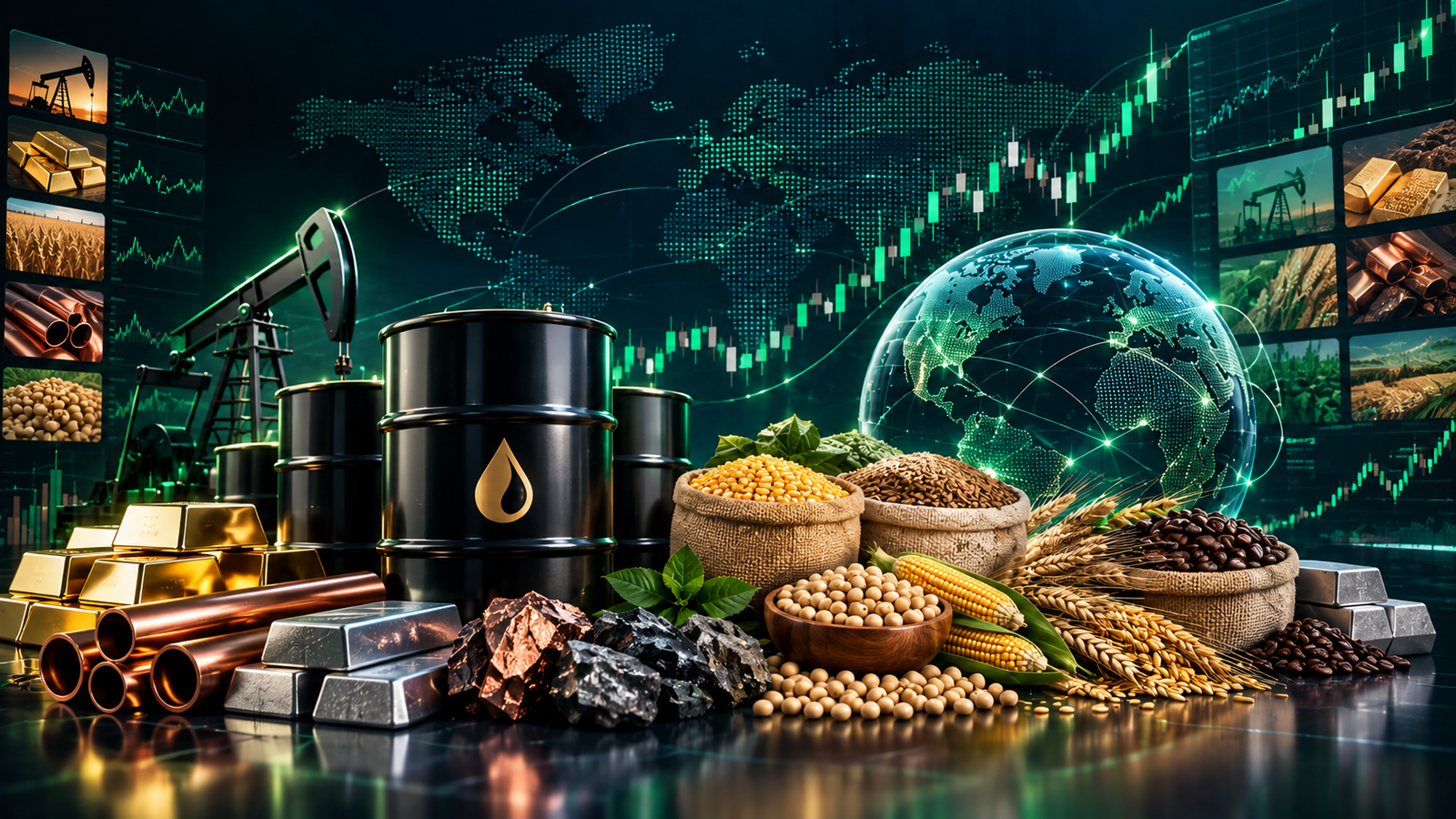
Commodity markets cover physical resources and related financial contracts. Major groups include energy, metals and agriculture. citeturn0search0turn0search1
Crude oil and natural gas connect with transportation, manufacturing, inventories and economic activity.
Gold, silver, copper and other metals have different monetary, investment and industrial demand drivers.
Grains and soft commodities can be sensitive to weather, harvests, inventories, exports and seasonal demand.
Commodity prices can respond to changes in production, consumption, inventories, logistics and expectations. citeturn0search2turn0search3
Mine output, drilling, refinery capacity and harvests affect available supply.
Stock levels can help show how available supply compares with current demand.
Industrial activity, transport, construction and food demand influence usage expectations.
Markets can move before physical data changes when participants anticipate a future shortage or surplus.
| Group | Examples | Common drivers |
|---|---|---|
| Energy | Crude oil, natural gas | Production, inventories, transportation, demand |
| Precious metals | Gold, silver | Rates, currencies, inflation expectations, investment demand |
| Industrial metals | Copper, aluminum | Manufacturing, construction, inventories, global growth |
| Agriculture | Wheat, corn, coffee | Weather, harvests, inventories, trade and consumption |
Different commodities respond differently to macroeconomic and physical-market conditions. citeturn0search3
Rates can affect currencies, financing conditions and the opportunity cost of holding some commodities.
Many internationally traded commodities are quoted in U.S. dollars, making currency conditions relevant.
Industrial and transportation activity can influence demand for energy and industrial materials.
Weather, outages, logistics disruptions and geopolitical events can alter supply expectations.
What is happening to supply? What is happening to demand? Are inventories changing? What are currencies and rates doing? What new information could change expectations?
Is production increasing, declining or facing disruption?
Is consumption expected to strengthen or weaken?
What are inflation, interest rates and economic growth doing?
What does the market already appear to expect?
Use related markets and research tools to add context rather than viewing a commodity price in isolation.
Historical relationships do not guarantee future outcomes. Forecasts can change, data can be revised and market reactions can differ from a headline.
Supply and demand expectations can change quickly, producing sharp price movements.
Futures and leveraged products can magnify gains and losses; contract mechanics matter.
Unit, delivery month, venue and instrument structure can change the price you are comparing.
Move from market concepts to practical research across stocks, crypto, forex, gold, commodities and economic data.